

- Recent Articles
-
Buyers Guides
- HOW TO USE COMFORT RATINGS
- BUYERS GUIDE: INSULATED WORK GLOVES
- BUYERS GUIDE: COLD WEATHER WORK BOOTS
- BUYERS GUIDE TO PAC BOOTS
- BUYERS GUIDE TO BASE LAYERS
- BUYERS GUIDE: PANTS OR BIB OVERALLS?
- BUYERS GUIDE: COVERALLS OR BIB OVERALLS?
- BUYERS GUIDE TO GLOVE DIPS & COATINGS
- LATEX vs. NITRILE COATED: WHICH IS THE RIGHT GLOVE?
- WHAT KIND OF WORK GLOVES ARE RIGHT FOR MY JOB?
- HAND PROTECTION THAT KEEPS PRODUCTIVITY HIGH
- THE IMPORTANT ROLE OF HAND PROTECTION
- HOW TOUCHSCREEN GLOVES IMPROVE SAFETY
- VITACOMFORT: A NEW LEVEL OF COMFORT & SAFETY
- WHAT TO LOOK FOR WHEN CHOOSING A WINTER WORK COAT
- WHY IS SYNTHETIC INSULATION BETTER?
- AIRBLAZE INSULATION DELIVERS MORE WARMTH WITH LESS WEIGHT
- WARMPLUS GRAPHENE LINING MAKES WARMER WORK GEAR
- DON'T COMPROMISE PROTECTION FOR PERFORMANCE
- WHY SOFTSHELL JACKETS ARE PERFECT FOR WORKING IN THE COLD
- EMBRODIERY
- Case Studies
-
Best Practices
- HI-VIS PPE: WHAT SAFETY MANAGERS NEED TO KNOW
- NATIONAL SAFETY MONTH: HIGH-VISIBILITY WORKWEAR THAT WORKS AS HARD AS YOUR CREW
- COLD TIPS
- NEW OSHA RULE ON PPE FOR WOMEN
- HOW TO PREVENT COLD STRESS INJURIES IN ROAD CREWS
- HOW TO STAY SAFE IN CONCRETE CONSTRUCTION
- KEY TERMS & DEFINITIONS
- HOW TO USE GLOVE LINERS
- THE IMPORTANT ROLE OF HAND PROTECTION
- PROPER FOOT CARE FOR WORKING IN THE COLD
- HOW TO PREVENT SLIPS, TRIPS & FALLS
- HOW TO CHOOSE HIGH-VISIBILITY WORKWEAR
- HOW TO LAYER WITHOUT OVERHEATING
- HOW OVERDRESSING HURTS PRODUCTIVITY
- HOW TO DRESS FOR WORKING IN THE COLD
- SAFETY TIPS FOR WORKING IN THE RAIN
- HOW TO DRESS FOR WORKING IN DIFFERENT TEMPERATURES
- HOW TO STAY SAFE & WARM WHILE WORKING OUTSIDE IN THE WINTER
- HOW TO SAFELY MANAGE & PREVENT COLD STRESS
- HOW TO STAY WARM WORKING WITH PRODUCE
- PREPARING FOR TEMPERATURE SWINGS
- THE SCIENCE OF STAYING WARM
- HOODS OR HATS: WHICH ONE IS SAFER?
- HOW DRIVERS & TRANSPORTATION WORKERS STAY DRY
- PERSONAL PROTECTIVE GEAR EVERY DRIVER NEEDS
- CHALLENGES OF WORKING IN LOW TEMPERATURES AS A DRIVER
- PROTECT YOUR TRUCK DRIVERS WITH HIGH-VISIBILITY WORKWEAR
-
Industry Knowledge
- TRADESHOWS & EVENTS
- KEY TERMS & DEFINITIONS
- KEY TERMS & DEFINITIONS
- BEST CLOTHING FOR MAINTENANCE STAFF IN FOOD PROCESSING
- HOW DO I STAY WARM WHILE WORKING IN MEAT PROCESSING?
- HOW TO STAY WARM IN A COLD STORAGE FREEZER
- 5 IMPORTANT PIECES OF CLOTHING FOR COLD STORAGE WORKERS
- GEAR THAT DRIVES PEAK PRODUCTION AS A FORKLIFT DRIVER
- CHALLENGES OF WORKING IN LOW-TEMPERATURE INDOOR ENVIRONMENTS
- PROTECTING PERISHABLES IN FOODSERVICE DISTRIBUTION
- TEMPERATURE CONTROL UNDER FSMA
- BEST HIGH-VISIBILITY JACKETS FOR CONSTRUCTION WORKERS
- COLD WEATHER SAFETY CHECKLIST FOR CONSTRUCTION WORKERS
- TOWER CLIMBER'S GUIDE TO WORKING OUTSIDE IN WINTER
- UTILITY WORKER'S GUIDE TO KEEPING WARM IN WINTER
- HOW TO IMPROVE DRIVER RETENTION AND RECRUITING
- THE IMPACT OF PROPER ERGONOMICS ON DRIVER WELLNESS
- QUALITY WON'T BE COMPROMISED
- WHY IRON-TUFF IS THE MOST ICONIC COLD WEATHER CLOTHING
- WHY ALL WORKERS NEED HIGH-VISIBILITY WORKWEAR
- HOW TO STAY SAFE IN LOW VISIBILITY & HIGH TRAFFIC CONDITIONS
- THE REAL COST OF HIGH EMPLOYEE TURNOVER
- HOW DOES PPE AFFECT YOUR BOTTOM LINE?
- MEDICAL COSTS OF PREVENTABLE INJURIES
- HOW TO STAY SAFE IN CONCRETE CONSTRUCTION
- HOW TO IMPROVE EMPLOYEE RETENTION IN COLD STORAGE
- HOW TO PREVENT COLD STRESS INJURIES IN ROAD CREWS
- HOW TO CHOOSE COLD WEATHER WORKWEAR FOR ROOFERS
- Use & Care

High-Visibility PPE: What Industrial Safety Managers Need to Know
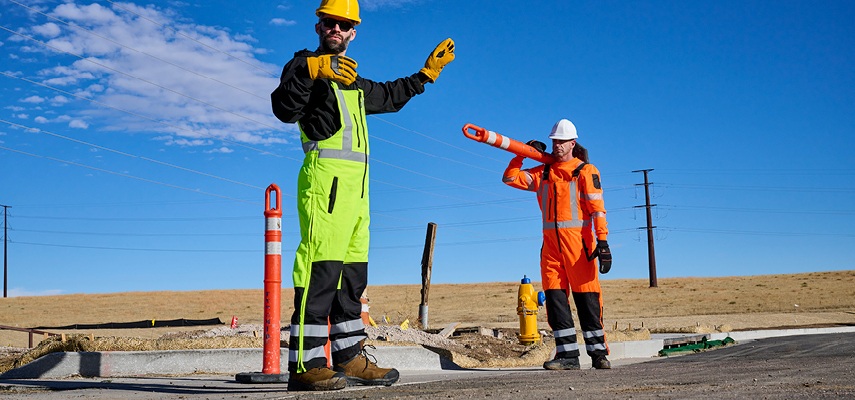
In busy industrial workplaces, effective high-visibility PPE and high-visibility workwear reduce struck-by hazards, improve operator reaction time, and help maintain compliance. This concise guide outlines standards, common program pitfalls, and practical best practices for industrial safety managers specifying industrial PPE.
Visibility Is a Core Safety Control
In warehouses, yards, loading docks and manufacturing floors, reduced sight lines and moving equipment make “struck-by” incidents one of the most frequent and serious risks. Well-specified high-visibility workwear increases recognition distance — the critical fraction of a second an operator needs to spot a worker and react. That short window often prevents an expensive and potentially life-changing incident.
High-visibility gear is not just for road crews. In industrial settings where vehicles and pedestrians share space, hi-vis is a primary line of defense against struck-by hazards.
Tip: Treat visibility like an engineering control — design traffic flow, sight lines and PPE together rather than relying on vests alone.
Standards & Classification: ANSI/ISEA 107
For reliable performance, look for garments that meet ANSI/ISEA 107 standards. The standard classifies garments by Type and Performance Class, helping safety managers match apparel to real job conditions:
- Types: Type O (off-road/internal), Type R (roadway/vehicle zones), Type P (public safety)
- Performance Classes: Class 1–3 indicate the amount of background fabric and reflective material; Class 2–3 are typically required in higher traffic or poor lighting.
Common Program Pitfalls
- Wrong class applied: Issuing Class 1 vests where Class 2 or 3 is required limits visibility.
- Poor maintenance: Faded fluorescent fabric, delaminated tape, or dirty garments degrade the garment's performance and may lead to citations.
- Low-cost false economy: Cheap garments wear faster and drive noncompliance — costing more long term.
Best Practices for Safety Managers
1. Begin with a hazard assessment
Map traffic patterns, vehicle speeds, lighting levels and task zones. Use that data to assign appropriate Type and Class by area — for example, Type O Class 1 for low-risk internal zones, Type R Class 3 for busy outdoor yards or docks.
2. Specify standards in procurement
Require ANSI/ISEA 107 labeling and include Type/Class in purchase orders. This ensures purchased gear meets your specification and eases supplier accountability.
3. Prioritize durability and inspection
Choose garments with stitched or heat-bonded tape, tested wash performance, and robust construction. Build inspection and replacement cycles into safety audits.
Training & Enforcement
- Train employees on when and why to wear hi-vis PPE
- Include care instructions and consequences for non-use
Task-Specific Matching
- Match gear to task: indoor forklift zones vs. outdoor loading
- Consider comfort and ergonomics to improve compliance
High ROI from a Thoughtful Hi-Vis Program
High-visibility PPE and high-visibility workwear are small investments that yield large safety and productivity returns. The difference between a properly specified, well-maintained hi-vis program and a poorly managed one often shows up in fewer near-misses, reduced injury claims, and stronger safety culture across the site.
For safety managers, success requires combining the right standards, procurement language, inspection routines, and training — not just handing out vests. When implemented correctly, industrial PPE programs protect workers and keep operations moving safely.